
Medicare post-acute care (PAC) reimbursement is increasingly driven by stricter federal spending controls, closer Medicare Advantage (MA) utilization oversight, and limited rate increases. Current policy priorities center on value-based accountability, shifts to lower-intensity care settings, and alternative payment models.
Key Reimbursement and Policy Drivers
- Rate Adjustments: Federal updates remain modest, with regulatory increases, such as proposed 2.6% IRF base rate growth, offset by MedPAC efforts to limit perceived overpayments. Chapter 9: Inpatient rehabilitation facility services (March 2026 Report) – MedPAC
- Medicare Advantage Pressure: Rapid MA enrollment growth subjects more patient pathways to prior authorization, narrow networks, and shorter institutional stays.
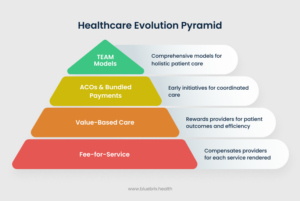
- Alternative Payment Models: Episode-based and bundled payment models, including TEAM, add downside risk for providers missing cost and quality targets across acute and post-acute transitions. TEAM Model and Post-Acute Care – Reg’s Blog
When a 1% reimbursement reduction happens, it is rarely a 1% margin event. For a skilled nursing operator, home health agency, hospice provider, or inpatient rehab facility with meaningful Medicare exposure, the lost revenue falls against a cost structure that cannot be resized overnight. Buildings remain open, clinical coverage remains mandatory, and labor markets do not respond to CMS rate adjustments with lower wage demands.
Policy discussions often frame payment changes as modest technical adjustments. Owners and operators experience them as a direct test of whether their care model, staffing structure, and payer mix can withstand another year of compressed economics.
Reimbursement cuts hit the bottom line disproportionately
Healthcare margins are thin because a large share of operating costs are fixed or slow to change. A facility cannot eliminate its overnight nursing coverage because Medicare payment is lower. A home health agency cannot simply stop maintaining intake, scheduling, compliance, quality, and billing infrastructure when its episodic reimbursement declines. The same is true of pharmacy, food, utilities, insurance, debt service, and required administrative functions.
Consider an organization with $100 million in annual revenue and a 4% operating margin. It produces $4 million in operating income. A 2% reduction in reimbursement, if it affects a meaningful portion of the revenue base and costs remain largely unchanged, can remove $2 million in revenue. The organization has not lost 2% of its margin. It has lost half of its operating income.
That arithmetic is why executives should resist casual interpretations of rate reductions. The relevant question is not whether the percentage cut appears small. The relevant question is how much contribution margin the affected revenue currently provides after direct clinical costs, and whether the organization has any credible capacity to adjust expenses without degrading care or compliance.
Labor turns a reimbursement reduction into a strategic problem
Labor is the largest operating expense for most post-acute and senior care providers, and it is also the least forgiving variable. Wage rates, agency utilization, overtime, benefit costs, and competition for nurses and aides have reset the industry’s cost base. Even where agency dependence has improved, many operators are paying materially more than they did before the pandemic.
A reimbursement cut arriving after those wage increases produces a painful mismatch. The provider is asked to deliver the same regulated service, often to a higher-acuity population, at a lower unit price. Cutting clinical hours may create immediate savings, but it can also increase turnover, harm quality indicators, weaken survey performance, and reduce the organization’s ability to accept complex referrals.
This is where short-term expense management can become self-defeating. Reducing staffing to protect a quarterly result may compromise occupancy, referral relationships, star ratings, or length-of-stay performance. In home health and hospice, insufficient clinical capacity can mean turning away admissions that would have supported overhead. In skilled nursing, it may mean becoming less competitive for Medicare Advantage or hospital-preferred networks.
The disciplined response is not to assume labor is untouchable. It is to separate productive labor from costly dysfunction. Organizations should examine scheduling accuracy, overtime patterns, contract labor, avoidable turnover, workflow duplication, and the distribution of clinical hours by acuity and census. Those are operational questions, not simply payroll questions.
Why payer mix determines who feels the cut first
Not every provider experiences reimbursement pressure in the same way. The severity depends on the affected payer’s share of revenue, the margin generated by that payer, contractual terms with Medicare Advantage plans, state Medicaid rates, and the organization’s ability to shift volume.
For a skilled nursing facility, a Medicare rate adjustment may be consequential even if traditional Medicare is a minority of patient days because those days have historically subsidized lower-margin Medicaid volume. If Medicare Advantage rates are already below the cost of managing complex patients, a reduction in fee-for-service Medicare can remove one of the few sources of financial flexibility.
Home health providers face a different but related exposure. Changes in payment methodology, behavioral assumptions, case-mix calibration, or outlier policy can alter the economics of specific episodes and referral categories. Providers with heavy exposure to medically complex patients cannot assume that a broad average increase protects them. The average may conceal losses in the cases they are best positioned to serve.
Senior living operators are not directly reimbursed in the same way for independent and assisted living services, but they are hardly insulated. Higher healthcare labor costs, reimbursement constraints among care partners, and pressure on residents’ post-acute options all affect acuity management, move-in timing, hospital discharge patterns, and the availability of services residents depend upon. Life plan communities, in particular, must view reimbursement policy through the entire continuum rather than through one line item.
How reimbursement cuts affect margins beyond the income statement
The first-order effect is lower revenue. The second-order effects can be more damaging.
When margins tighten, capital spending is often deferred. That may mean postponing renovations, technology upgrades, fleet replacement, cybersecurity investments, or investments in clinical documentation and analytics. Yet those are precisely the capabilities many organizations need to compete for referrals, improve productivity, and manage risk under value-based arrangements.
Margin compression also changes financing options. Lenders and investors scrutinize debt-service coverage, occupancy trends, lease obligations, and the durability of cash flow. An operator that was financially stable under prior rates may find itself with limited borrowing capacity after a payment reduction, particularly if it has weak occupancy or a high labor-cost base. Private equity-backed platforms and nonprofit systems face different capital structures, but neither is exempt from the basic reality that lower cash flow narrows strategic choices.
The market consequences extend to access. Providers may close underperforming units, exit rural markets, limit admissions with high clinical needs, or consolidate. Policymakers may view payment restraint as fiscal discipline, especially given Medicare’s long-term financing challenges. But fiscal discipline without a credible assessment of provider capacity can produce a false economy: lower public spending in one category followed by avoidable hospital utilization, diminished patient choice, and fewer providers willing to serve difficult markets.
The wrong response is across-the-board cutting
Across-the-board expense reductions are attractive because they are fast and politically simple. They are also frequently blunt. A uniform cut does not distinguish between a service line that creates strategic value and one that consistently destroys cash. It does not distinguish between a poorly designed staffing pattern and staffing required to safely manage high-acuity residents.
Leadership teams should instead identify where reimbursement pressure is concentrated. Is the issue a specific payer, geography, clinical category, contract, or facility? Are denials and authorization delays worsening the effective rate? Is the organization carrying unprofitable volume because it lacks timely case-level profitability data? These questions produce better decisions than a generic mandate to reduce expenses by a fixed percentage.
The analysis must be granular. Providers need to understand contribution margins by payer, service line, branch, building, referral source, and patient profile. They also need to distinguish between payment rates on paper and realized reimbursement after denials, claims edits, managed care adjustments, and unpaid administrative work. A contract that appears acceptable at the rate-sheet level may be unworkable once utilization controls and authorization friction are included.
Strategic responses should protect capability, not merely cash
There are several defensible responses to sustained reimbursement pressure, but their usefulness depends on the operator’s market position.
First, improve revenue integrity. Documentation, coding, clinical record completion, authorization management, and denial prevention are often treated as back-office functions. They are margin functions. Providers should not confuse legitimate reimbursement capture with aggressive billing. The goal is to be paid accurately for the acuity and services already being delivered.
Second, redesign care delivery around the patient populations the organization can serve well. This may involve concentrating resources on high-performing service lines, changing referral criteria, developing specialized clinical programs, or exiting contracts that create volume without contribution. Volume is not a strategy when every additional admission adds loss.
Third, use scale carefully. Consolidating back-office functions, purchasing, staffing pools, and technology can improve economics, but consolidation also creates execution risk. A larger platform with inconsistent clinical operations is not more resilient simply because it has more beds or branches. Scale works when it standardizes what should be standardized while preserving local accountability for census, staffing, and quality.
Finally, providers should participate more forcefully in the policy debate. Reimbursement policy is not an abstract Washington issue. It determines whether organizations can retain staff, invest in quality, and sustain access in communities with few alternatives. The industry’s case is strongest when it moves beyond broad complaints and presents credible data on costs, access, quality, and the consequences of withdrawing capacity.
The hard reality is that reimbursement cuts will remain part of the healthcare landscape. Medicare and Medicaid face real fiscal constraints, and policymakers will continue searching for savings. The organizations best positioned to endure will be those that treat every payment change as a strategic signal: know where the margin is earned, protect the clinical capabilities that create value, and refuse to let a temporary accounting response become a permanent deterioration in care.
