
A weak discharge network is no longer a referral problem. It is a margin problem, a compliance problem, and increasingly a reputation problem. That is why post acute care strategy now sits much closer to the center of health system planning, Medicare Advantage contracting, and operator survival than many organizations want to admit.
For years, too many providers treated post-acute performance as a downstream function. Hospitals focused on length of stay and readmissions. Skilled nursing facilities chased census. Home health agencies concentrated on episode management. Senior living operators often watched the clinical side from the edge. That fragmented view does not hold up under current reimbursement pressure, labor costs, value-based purchasing, and intensified oversight from CMS and Medicare Advantage plans.
The organizations that will outperform in this environment are not simply the ones with more beds, broader geographic reach, or stronger local brand recognition. They are the ones that treat post-acute care as a coordinated strategic asset with measurable financial, operational, and policy implications.
What a post-acute care strategy really means
A credible post-acute care strategy is not a referral spreadsheet dressed up as strategy. It is a deliberate operating model that determines where patients go after acute care, how outcomes are managed across settings, how reimbursement risk is distributed, and how performance is measured against both regulatory and market expectations.
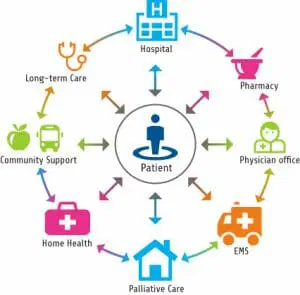
That sounds obvious, but the execution gap is large. Many providers still confuse network participation with network performance. Being on a preferred list is not the same as being clinically integrated. Having access to referral volume is not the same as controlling avoidable utilization, denials, and rehospitalizations.
At the executive level, the strategic question is straightforward. Is your post-acute footprint helping your organization manage total cost of care and regulatory risk, or is it simply absorbing volume while creating downstream instability?
For hospitals and health systems, the answer increasingly affects throughput, physician alignment, and payer negotiations. For skilled nursing, home health, hospice, and senior living operators, it affects contract viability, census quality, staffing intensity, and capital access. For investors and policy watchers, it signals whether a platform has durable positioning or just temporary occupancy momentum.
The real “nugget” is effectively managing the care transition – making and saving money. A decent resource/evidence based model comes from CTI. Information is here: Home – Care Transitions Intervention®
Why the old model is breaking down
The traditional post-acute model relied on a fairly simple formula: maintain referral relationships, document adequately, keep occupancy up, and adapt around annual reimbursement changes. That approach is no longer enough because the market is being reshaped by three overlapping forces.
First, reimbursement is more punitive when performance drifts. Value-based purchasing, managed care authorization pressure, and utilization management have reduced the margin for operational inconsistency. If length of stay expands without a clear clinical basis, if rehospitalizations rise, or if documentation is weak, the financial penalty shows up quickly.
Second, labor instability has altered the economics of post-acute delivery. Operators can no longer assume staffing can be flexed without affecting outcomes. Agency dependence, wage inflation, and clinical leadership turnover directly influence care transitions, quality metrics, and payer confidence.
Third, policymakers and payers are scrutinizing ownership structures, coding practices, and site-of-care decisions more aggressively. Post-acute providers are operating in a market where policy is not background noise. It is an active force shaping payment, referrals, and public perception.
This is where many organizations misread the moment. They respond tactically to denials, occupancy pressure, or survey risk, but they do not redesign the underlying model. A real strategy begins when leadership accepts that post-acute performance is no longer a siloed operating issue. It is enterprise strategy.
The core elements of a workable post-acute care strategy
The first requirement is disciplined market segmentation. Not every referral source should be pursued with the same intensity, and not every patient mix creates durable value. Operators need a clear view of which hospitals, physician groups, and payer channels generate clinically appropriate volume with acceptable reimbursement and manageable utilization risk. Growth without selectivity can raise census while eroding margin.
The second requirement is data that can survive scrutiny. Most organizations claim to be data-driven, but many still rely on lagging reports and inconsistent definitions across service lines. A workable strategy requires common performance measures around readmissions, length of stay, functional improvement, denial trends, referral conversion, staffing stability, and discharge disposition. If the hospital, skilled nursing provider, and home health agency are all describing performance differently, strategic alignment is mostly cosmetic.
The third requirement is clinical standardization across transitions. This is where many preferred networks fail. They are built on relationships, not operating discipline. Standardized transition protocols, medication reconciliation, escalation pathways, and communication norms matter because variation across settings creates avoidable utilization. In a fee-for-service world, some of that inefficiency was tolerated. In the current environment, it becomes a contracting and credibility problem.
The fourth requirement is payer realism. Operators that still build plans around historical Medicare assumptions are behind the market. Medicare Advantage penetration continues to reshape post-acute utilization, length of stay expectations, and documentation burdens. A serious strategy does not merely react to managed care. It models payer mix evolution, identifies contracts that destroy value, and builds capabilities around authorization management, appeal discipline, and outcomes reporting.
Strategy is local, but the pressure is national
One of the more common mistakes in this space is assuming that local relationships can override national policy and reimbursement pressure. They cannot. Strong local execution still matters, but it now operates within a national framework defined by CMS rulemaking, Medicare trust fund concerns, state-level oversight, and private plan behavior.
That has practical implications. If policymakers continue pressing for lower avoidable spend and greater transparency, post-acute providers will face more pressure to prove that site-of-care decisions are clinically justified and economically responsible. If Medicare Advantage continues tightening utilization controls, operators with weak documentation and poor handoff discipline will lose negotiating leverage. If investors and lenders continue rewarding operational predictability, organizations without measurable post-acute strategy will face a higher cost of capital, whether they recognize it or not.
This is why the sector needs to stop speaking about post-acute care as if it were merely a capacity issue. Capacity matters, but strategy now turns on performance credibility. Can you demonstrate outcomes? Can you manage transitions? Can you support health system partners under scrutiny? Can you defend your role in the continuum with data, not anecdotes?
Where organizations get this wrong
Some systems over-centralize and assume corporate scale will fix weak local execution. It rarely does. A regional network may look efficient on paper but still fail if discharge planners do not trust the receiving providers or if response times are inconsistent.
Some operators take the opposite approach and rely too heavily on relationship-driven referrals. That model may sustain volume for a period, but it is vulnerable when payer rules tighten or hospital partners become more selective about preferred networks.
Others overinvest in technology while underinvesting in accountability. Software can improve visibility, but it does not replace clinical leadership, physician engagement, or disciplined care management. Post-acute strategy fails when executives believe the dashboard is the strategy.
There is also a recurring issue in senior living and adjacent sectors. Leaders sometimes assume that as acuity rises, demand alone will justify broader post-acute involvement. Demand helps, but higher acuity without stronger operating infrastructure invites survey risk, staffing strain, and payer conflict. Expansion is not strategy unless the model can absorb complexity.
What leaders should do now
The immediate task is not to create another strategic plan deck. It is to identify where your current post-acute model leaks value. Start with referral quality, not just referral volume. Examine which payer arrangements consistently produce administrative friction or subpar margins. Look closely at handoff failure points, avoidable readmissions, and documentation breakdowns. If the same operational problems keep resurfacing, they are not isolated events. They are signs that the strategy is missing.
Leadership teams should also pressure-test whether their partnerships are genuinely aligned. A hospital seeking lower total cost of care, a skilled nursing operator seeking higher census, and a home health agency seeking faster admissions can work well together, but only if incentives are explicit and performance is transparent. Misaligned economics will eventually overpower friendly relationships.
This is also the time to be honest about organizational capability. Not every provider should try to be everything in the continuum. In some markets, the strongest strategy is to narrow focus, improve execution in a limited set of service lines, and become indispensable in a clearly defined role. In other markets, vertical integration may make sense. It depends on capital, labor stability, payer mix, and leadership depth. The trade-off is real: broader control can improve coordination, but it also increases operating complexity and exposure.
The next few years will reward providers that can connect policy awareness to operating discipline. That is where the market is headed, and frankly, it is where it should be headed. Post-acute care has too much financial and clinical significance to remain managed by habit, local politics, or backward-looking assumptions. A serious post acute care strategy is no longer optional. It is how organizations prove they belong in the continuum as reimbursement tightens and expectations rise.
The providers that face that reality early will not just protect margin. They will have a far stronger argument for relevance when the market starts deciding who deserves the next referral, the next contract, and the next dollar of trust.

One Response